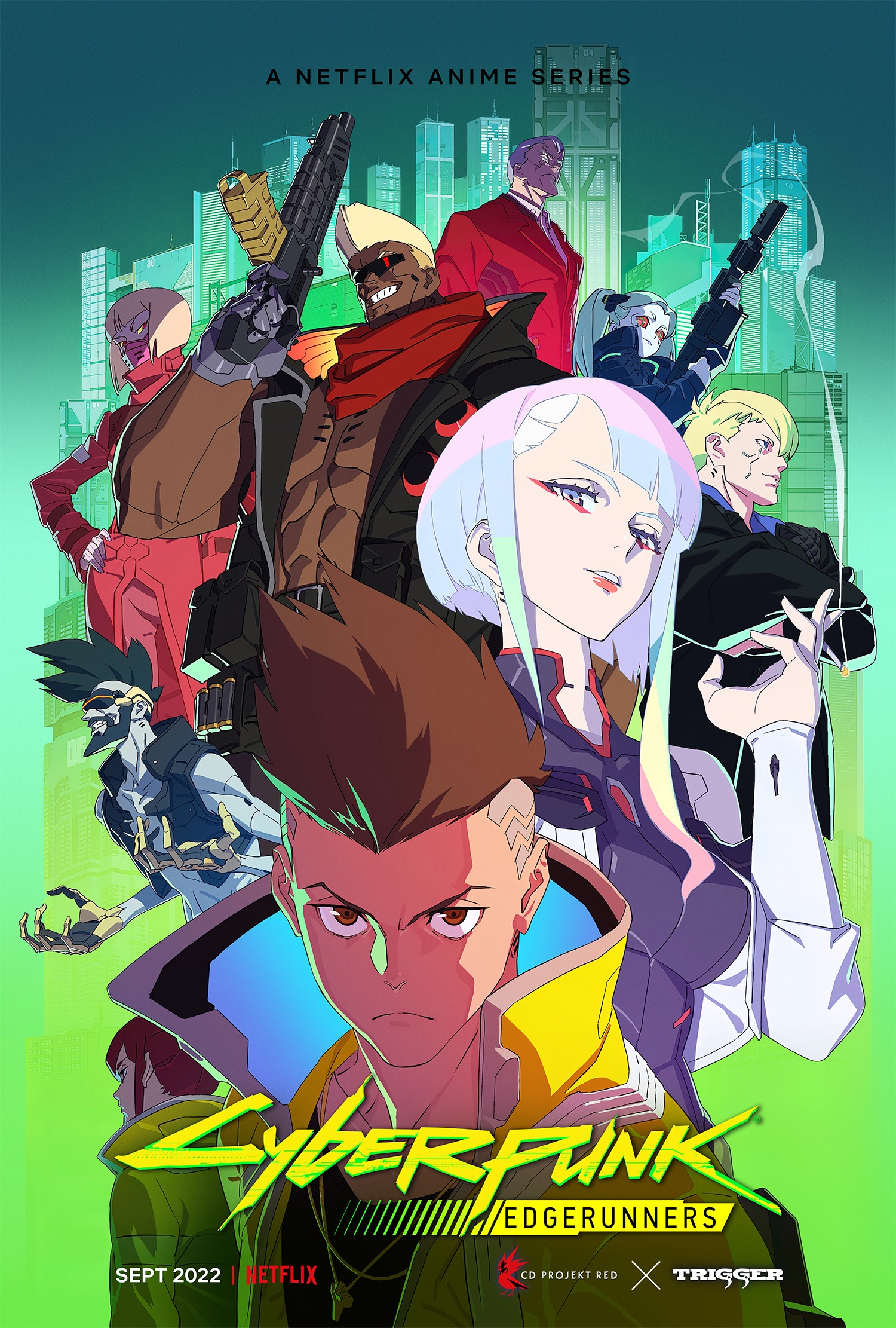
Rating: 9.6/10
This show holds a special place in my heart as the first anime I ever watched. To be honest, I’m glad it was: it definitely has a more “western” feel to it than any other anime I’ve watched since then, which means the “weird” stuff people commonly complain about barely shows up in Edgerunners. Instead, it has a much faster pace, less exposition, and overall just feels way more frenetic---in line, of course, with the destructive “live fast, die a legend” mentality that pervades the show.
Favorite Characters
David/Maine: The parallel between these two characters is less than subtle, and so I like them for pretty much the same reasons: they’re both kind-hearted people whose ambition, compounded with the tragic ruthlessness of Night City, ultimately leads to their downfall.
Rebecca: How can you not love her? One of the most unique characters in all the anime I’ve seen so far.
As for the rest, Lucy included, I feel like they’re all not really as interesting as the three characters mentioned above.
Favorite Moments
Definitely “fast is what you do best, ain’t it?” So sad.
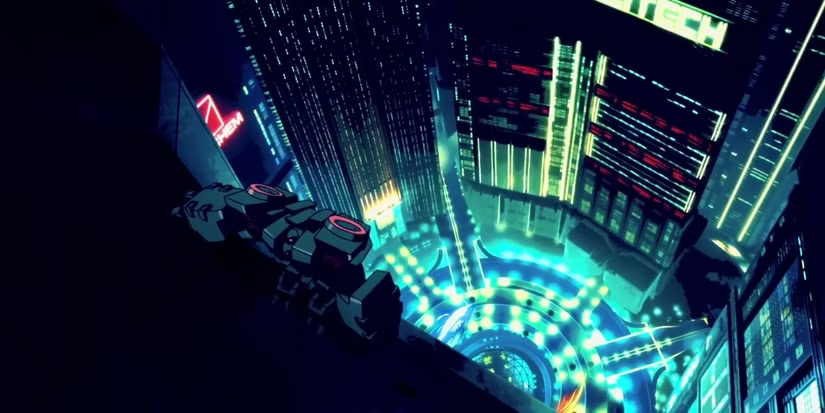
Also the “top of Arasaka tower” bit where David is flipping out and thinks Rebecca is his mom: an incredibly sad moment that illustrates how a boy’s ambition, once an innocent wish to provide for his mom, has been mutilated by Night City into self-destruction.
Cyberpsychosis + Marx
Inspired by this Medium post, I wanted to discuss this fascinating concept a little more as well: particularly, the “I’m built different” mentality that allows this terrible affliction to perpetually claim new victims.
The most in-your-face theme of Edgerunners is classic Marx: corpos suck and are oppressing everyone else. Being “at the top of Arasaka tower” parallels the American dream in its role as a false consciousness, an impossible goal which nonetheless keeps the edgerunners running, no matter the cost.
Cyberpsychosis adds yet another layer to this false consciousness. When a cyberpsycho breaks, the still-dreaming onlookers don’t blame it on the circumstances that brought him to the brink of cyberpsychosis in the first place. Instead, the cyberpyscho simply wasn’t good enough, wasn’t “built different” enough, to withstand the weight of his chrome. In the back of the dreamers’ minds, chrome has implanted an unshakeable vision of individual, not collective, glory---a misguided hope of being the “chosen one” to at last rise above Night City, even when they’ve seen so many others fail. Hence why the edgerunners take on missions which are high-risk but basically meaningless in the war against the corpos:
Each dreamer becomes so blinded by his pursuit of individual glory that they all forget their common enemy.
And alas, cyberpsychosis represents the inevitable fate of all who think in this way: for no single man, no matter how great, could ever overthrow the corporate overlords alone.
Closing Thoughts
Revisiting this show has made me remember how raw its emotions were, further amplified by my innate love for the nighttime. And, CD Projekt RED, I must say this show definitely served its purpose; I’ve been itching to get into the grotesquely sleek, tragically romantic world of Cyberpunk ever since I finished.