Author: Emily Bronte
Genre: Gothic
Published: 1847
Characters
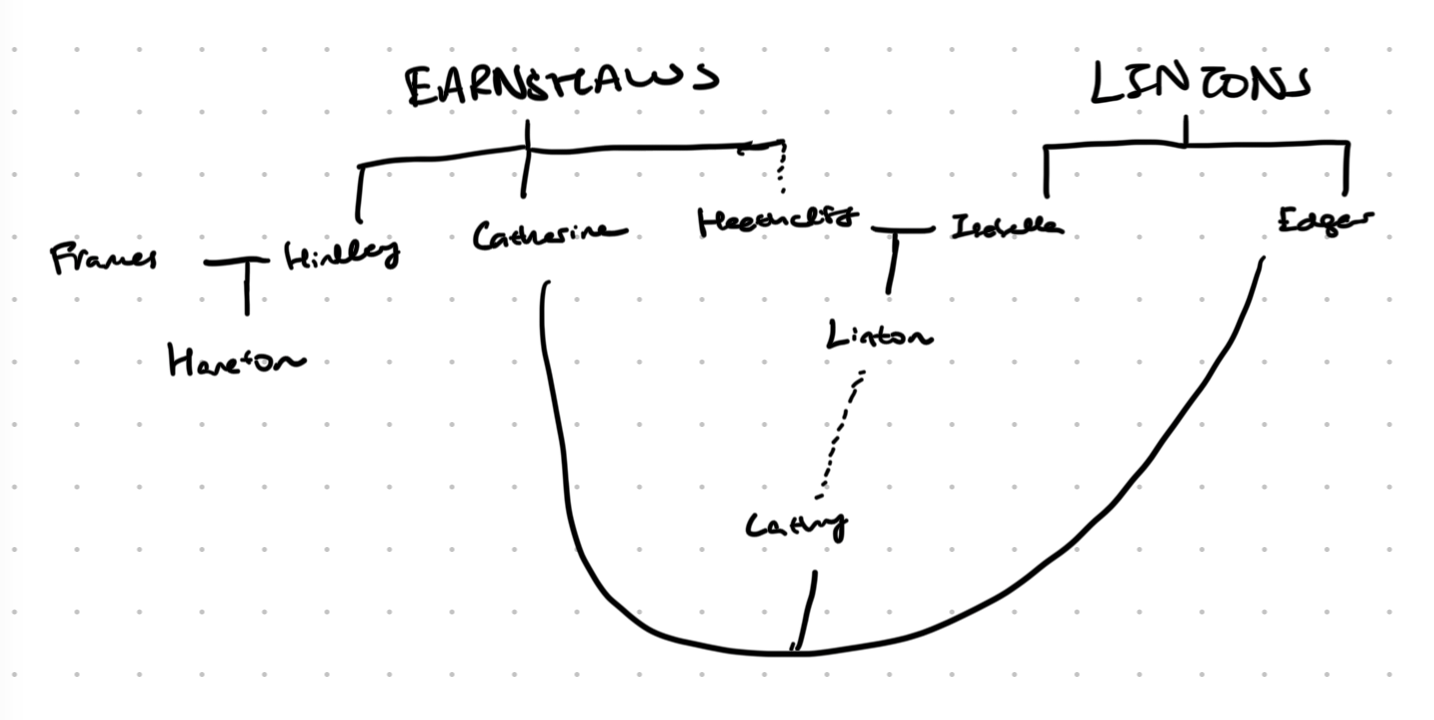
Heathcliff: dark-skinned, violent, rough, starts poor but amasses a mysterious fortune off-screen
Catherine: beautiful, strong-willed, vain
Edgar: sensitive, delicate, loving
Isabella: beautiful but naive, impulsive
Hareton: abused but still good at his core
Hindley: jealous, broken, lost, abusive
Cathy: naive, sensitive and kind but prejudiced
Conflicts
Heathcliff vs. Edgar: rich vs. poor background, societal standards vs. “true love”, raw passion vs. propriety
Edgar vs. Isabella: naivete, stubornness, rebellion
Themes
Children suffer most from the irresponsible actions of their parents. This begins with Mr. Earnshaw’s decision not only to take in a destitute orphan but also to favor him over his own son. The abuse continues with both Hindley’s and Heathcliff’s mistreatment of Hareton, Linton, and Cathy. Thus, parent-child abuse catalyzes every conflict in the novel.
The new cannot assimilate into the old without concessions and compromise. With Catherine, Heathcliff sees no intermediate option between total estrangement and absolute, mutual devotion. However, the latter would cause an immediate upset of established social order and expectations, and when he realizes such drastic revolution is impossible, he doesn’t retreat to more gradual means but rather gives up completely. In the end, his inability to settle for less leaves him with nothing at all.
But where Heathcliff and Catherine failed, Hareton and Cathy succeed because both sides compromise and come to terms with the natural inequlity of their relationship. Hareton puts aside his pride and allows Cathy to teach him how to read, while Cathy also puts aside her prejudice and offers Hareton an honest chance at education. Although Cathy’s social status remains higher than Hareton’s, their emergent bond demonstrates that social change must happen in gradual steps rather than all at once.