Rating: 9.6/10
My favorite scenes (in no particular order)
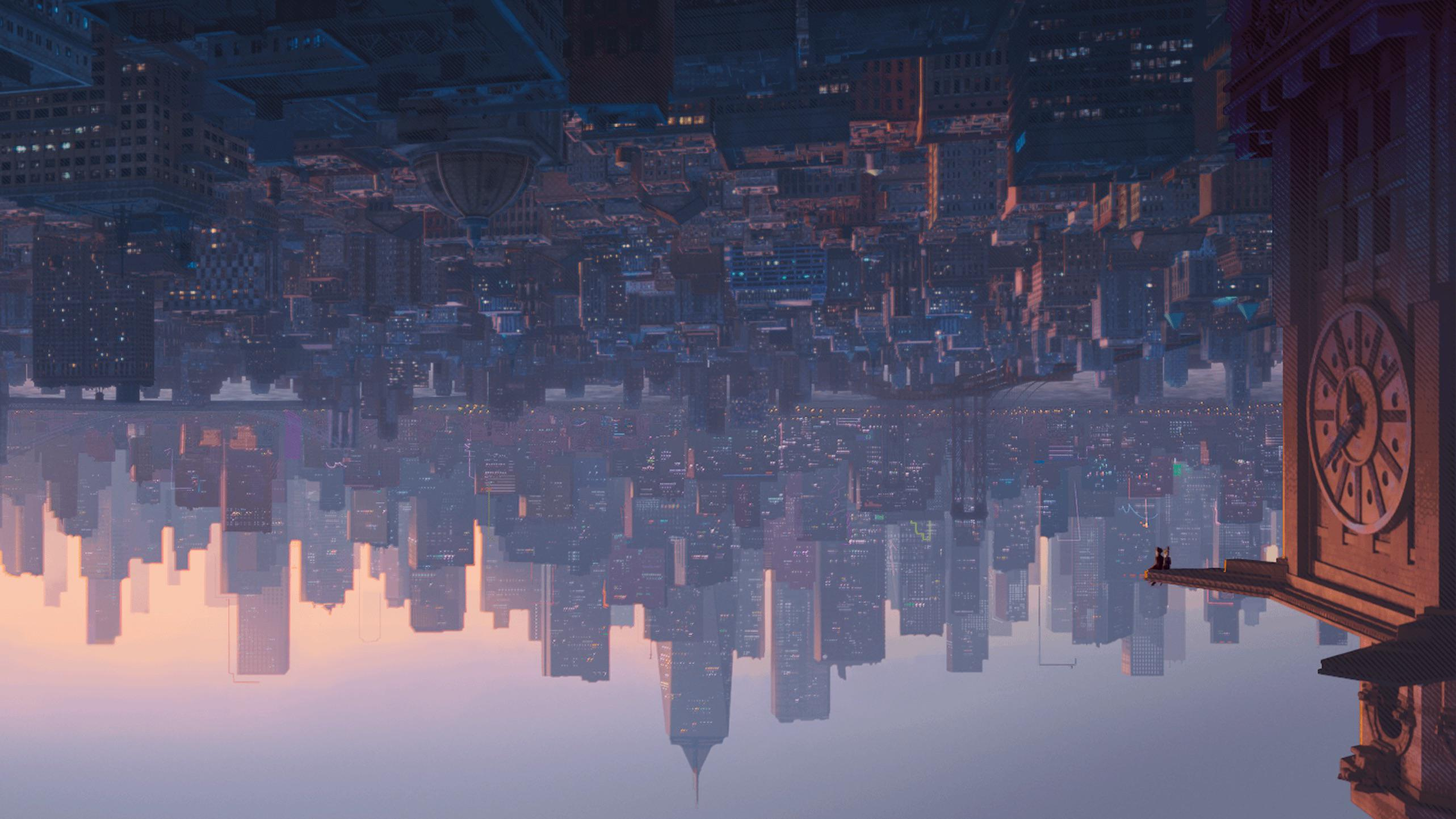
The entire “Mona Lisa” sequence leading up to this moment really made me adore this duo, and the climactic moment they share where they both (basically) confess their feelings felt really well-written, with lines that maintained the swagger of both characters while still getting genuine feelings across.
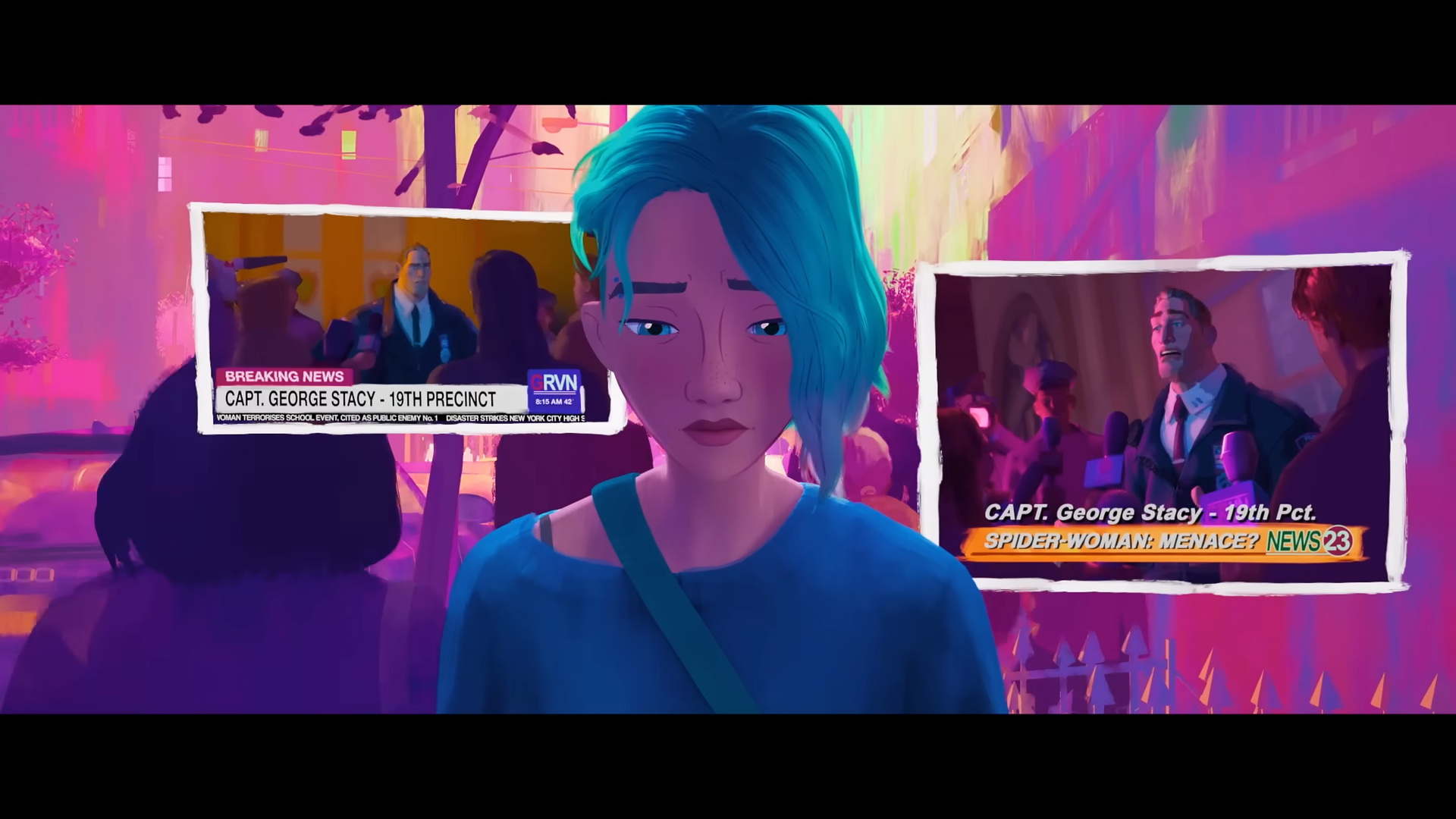
The entire opening sequence with Gwen. In just 10 minutes, the film beautifully illustrates how the secrecy of Gwen’s identity as Spider-Woman has placed her into a heartrending conflict against her own dad; he has devoted all his love and strength into a pursuit he believes is for his daughter’s sake, but in doing so has achieved the exact opposite. Both characters have placed the other into a terrible predicament, and yet neither is truly in the wrong—a tragedy depicted beautifully by emotions bleeding into both the color and soundtrack of every scene.
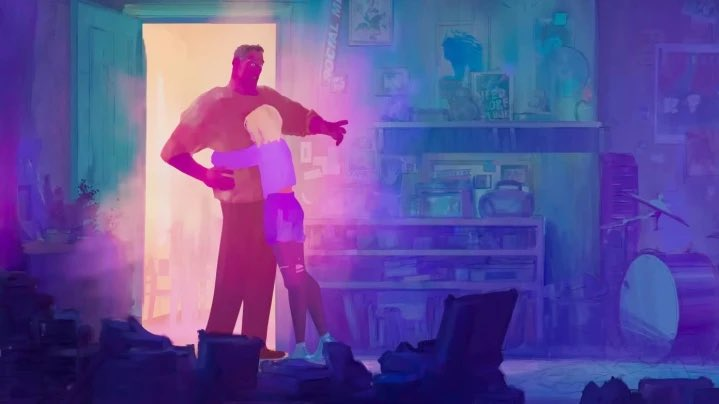
Every scene in Gwen’s universe was beautiful in my eyes, but the ones with her dad especially so. We really hit both ends of the emotional spectrum—heartbreaking when he points the gun and her, and heartwarming when they finally make up.
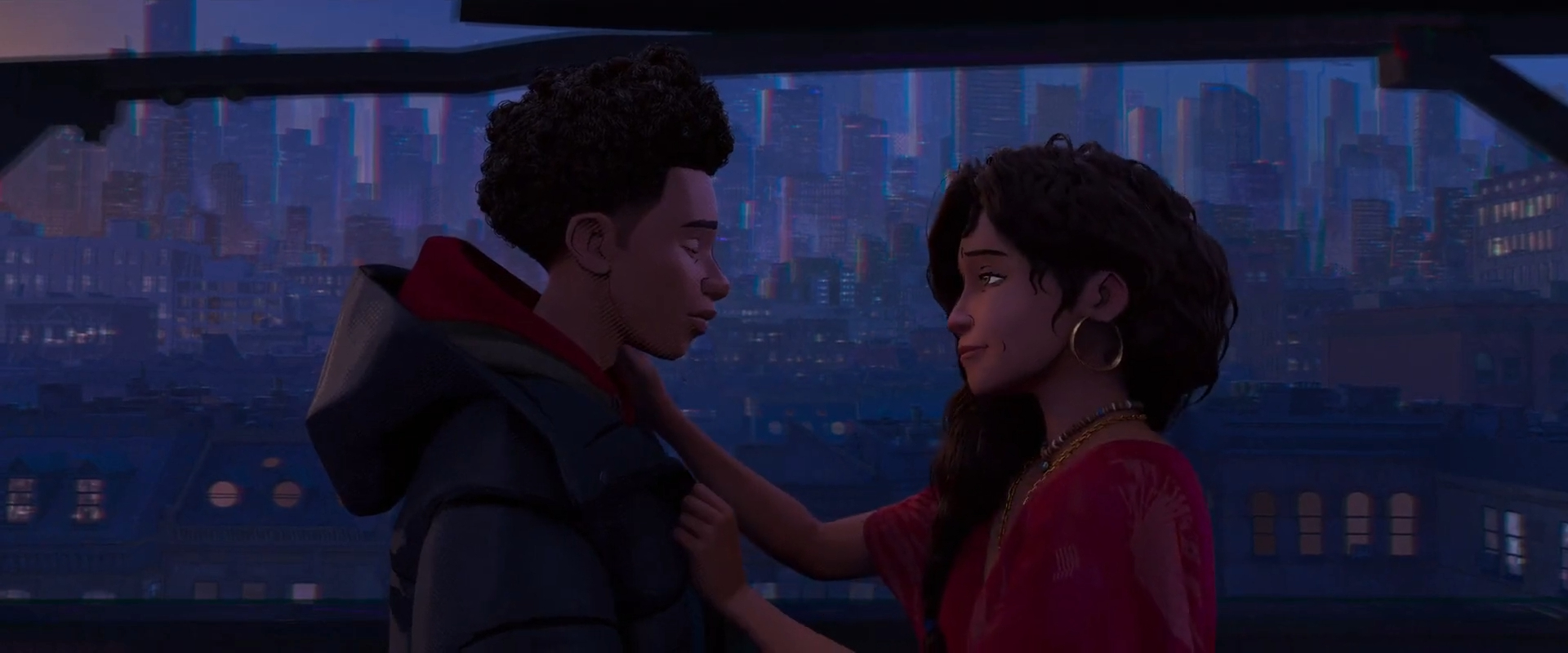
Don’t have much to say about this one—just another beautiful parent-kid moment. Plus, the lighting?? Maybe I’m just too partial to the nighttime…
Why?
So, why do I love this film so much?
I think the most obvious reason is that the adolescent struggles faced by its main characters are all relatable—conflicts with parents, struggling to discover identity, and trying to find a place in society. In spite of absurd superpowers and multiversal travel, the plot still resonates with me far deeper than most other films.
Of course, we can’t talk about Spider-Verse films without addressing their extraordinary visuals. Beyond the fact that “every scene’s a wallpaper”, the colors are never superfluous and always contribute to the mood of the scene: we see this especially in Gwen’s universe as I discussed above, but also the dreary green-black color scheme of Earth-42.
Building on that idea, I really adore how it feels like every aspect of the film, from visuals to sound design, works cohesively toward weaving one beautiful narrative. Despite the movie’s multiversal nature and formidable length, none of its content feels superfluous. For instance:
- The opening sequence serves to introduce the Spider-Society as well as Gwen’s backstory.
- In addition to introducing a fun new side character in Pavitr, the Mumbattan sequence serves the parallel purposes of demonstrating the antagonist’s increasing threat level, building tension with Hobie, and also continuing to show Gwen’s conflicted feelings about Miles, created by her clashing identities as a Spider-Society member but also as Miles’ friend.
- Beyond just providing some fun comic relief, the chase sequence also helps demonstrate the hive-mindedness of Spider-Society (perhaps portraying the danger of groupthink?) that has infected even old friends like Peter B. (also perhaps demonstrating that the older you get and the more you desire security, the easier it can be to conform to society). As I write this, I actually discover a new theme of the movie: the struggle of youthful idealism against societal standards. It also contains what is arguably the climax of the film, when Miles makes the decision to cut Gwen off and go home. Finally, it’s also a clever way of illustrating Miles’ Spider-smarts!